18 Dec 19:00
12,00 EUR
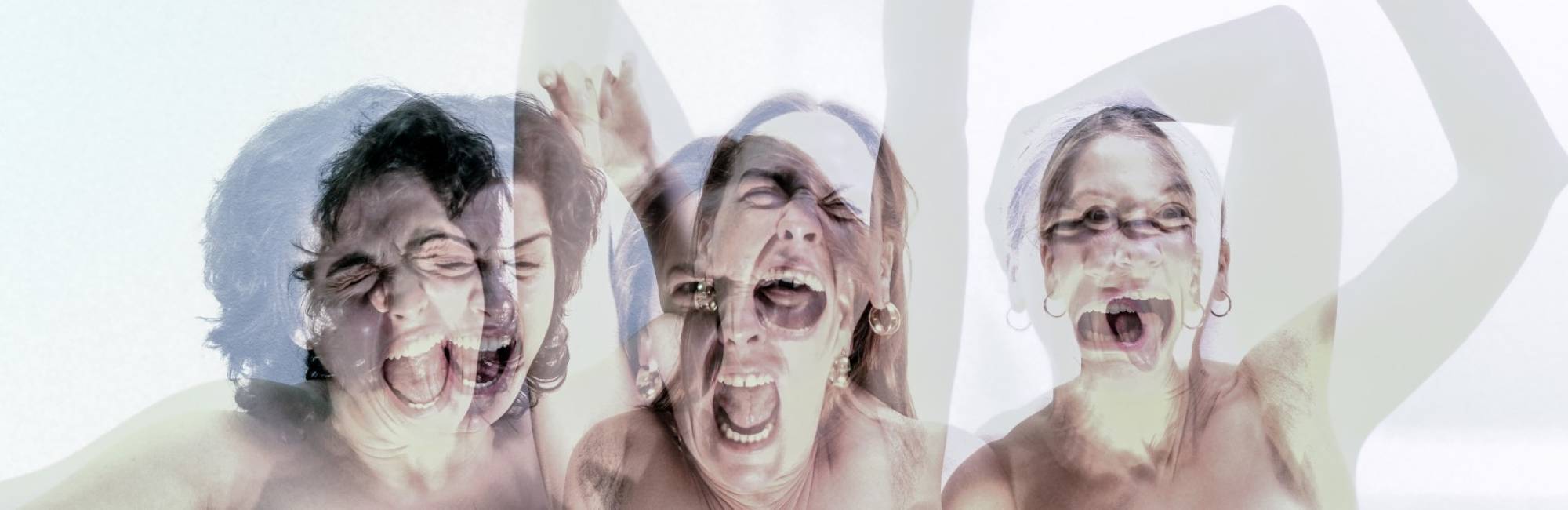
During the witch trials, inquisitors often used the term ‘sabbat’ to describe a midnight gathering of witches and demons. According to the accounts, participants in these gatherings drank, devoured infants, danced, practised witchcraft and engaged in orgies. The sabbat was thus a fantasy concocted by men to convey their idea of how women might gather in the absence of men. As stated in The Hammer of Witches (Malleus Maleficarum), the standard medieval handbook for conducting inquisitorial trials: ‘When a woman thinks alone, she thinks evil.’
The demonisation of women’s gatherings is neither unusual nor historically unique. The production thus conceives of the sabbat as a supratemporal space of freedom and camaraderie. In examining the witch trials, the show shifts its focus away from the inquisitors’ records to explore the actual social and economic context in which the trials took place. It identifies a pattern of systematic oppression of women’s bodies, the destruction of their knowledge and the erosion of their economic independence – a pattern that was by no means confined to the period of the witch-hunt frenzy. From this perspective, the persecution of witches emerges not as a folkloric or supernatural phenomenon, but as a mechanism of social, political and economic control, punishment and the elimination of unwanted bodies. The semi-mythologised concept of witchcraft is now called by its proper name: femicide.
Indirectly, the performance also explores the very historicisation of this process. In the remnants – fragments of reality that survived without passing through the hands of the inquisitors – it seeks traces of forgotten utopias: non-binary ways of understanding history, alternative social orders, liberated women, and spaces of resistance and collective emancipation. Its perspective then broadens to trace the images of women who were perceived as threats to the established order and consequently burnt at the stake.
15,00 EUR
12,00 EUR * * EUR for younger than 25 and older than 65, as well as pensioners.
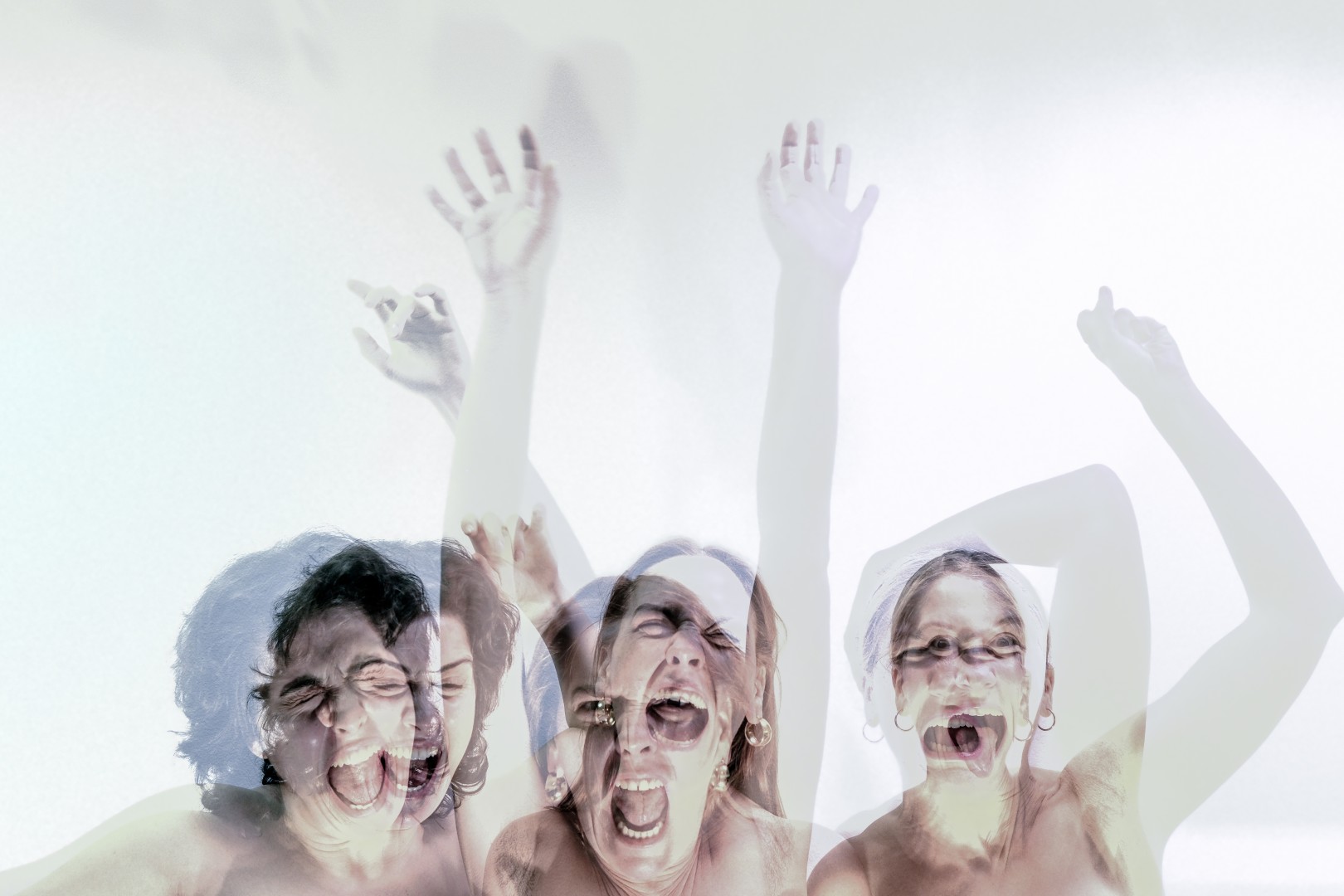
Foto: Nika Erjavec
Project authors: Živa Bizovičar, Nik Žnidaršič
Director: Živa Bizovičar
Dramaturg: Nik Žnidaršič
Set design: Nika Erjavec
Costume design: Nina Čehovin
Cast: Mojka Končar, Tamara Avguštin, Ivana Percan Kodarin
Choreography: Ana Javoran
Sound design: Ana Jerina
Production: Maska Ljubljana
Co-production: Cankarjev dom
Noches de Tablao

Founder and main co-funder of Cankarjev dom’s Arts and Culture programme

