
Oct - Dec 2026
Literary Ecoscapes
Conversations at the Intersection of Literature and Climate Change

The Literary Ecoscapes series continues to hold conversations on literature that engages with climate change, human responsibility towards the planet, and our relationship with nature.
The series brings together writers, scientists, philosophers and other thinkers to discuss books that engage with environmental issues and to explore how art can still shape collective consciousness and encourage more sustainable ways of thinking.
The discussions are moderated by Dr Maša Jelušič, who holds a PhD in environmental protection and is also a writer, and Dr Andrej Blatnik, a writer with a PhD in communication studies.
Boštjan Perovšek's soundscapes, composed especially for each evening, lend the series a distinctive atmosphere. We therefore invite audiences to arrive a few minutes before the discussion begins and to remain for a short while afterwards to immerse themselves in this aural experience.
Environmental awareness and the representation of nature in literature can be traced from the Romantics – Wordsworth, Keats and Coleridge – and the American Transcendentalists – Thoreau, Muir and Emerson – to Rachel Carson's groundbreaking Silent Spring, which exposed the darker side of the chemical industry.
In recent decades, ecological concerns have permeated a wide range of authors and genres, acquiring renewed urgency in the present day. Contemporary writers such as Amitav Ghosh, Richard Powers, Kim Stanley Robinson, Elif Shafak and Jeff VanderMeer are producing works that draw attention, both subtly and forcefully, to our relationship with the planet, while also receiving the highest literary honours. Nobel laureates Olga Tokarczuk and Han Kang further suggest that ecological consciousness has become one of the defining moral imperatives of contemporary literature.
Slovenian literature, too, has witnessed a growing engagement with environmental themes. Writers such as Irena Cerar, Irena Štaudohar, Iztok Geister and Ajda Bračič have brought the natural world to the centre of contemporary literary reflection. The recognition accorded to Nataša Kramberger's Po vsej sili živ ("Alive Against All Odds") with the Prešeren Fund Award underscores that writing about nature today is not merely an aesthetic undertaking, but also a way of bearing witness to the lived realities of climate change.
Previous discussions have addressed extreme weather and flooding with Professor Lučka Kajfež Bogataj through Amitav Ghosh's The Hungry Tide; explored the ecological anxieties of everyday life with Tina Vrščaj and her novel Na Klancu (“On the Slope”); reflected with Professor Robert Brus, drawing on Richard Powers' The Branching Out, on whether trees might one day be granted a political voice; and, with Swedish writer Daniel Gustafsson, examined the dynamics of otherness and the industrial exploitation of nature through his novel Fine de Claire.
The new season ventures into new genres and literary forms while opening its doors to new voices. Audiences are invited to take part in the conversation throughout the evening, both during the discussion and after it has formally concluded.
Each event begins with the same question: Why is it important today to think about climate change through a dialogue between art and science?
Dr Maša Jelušič
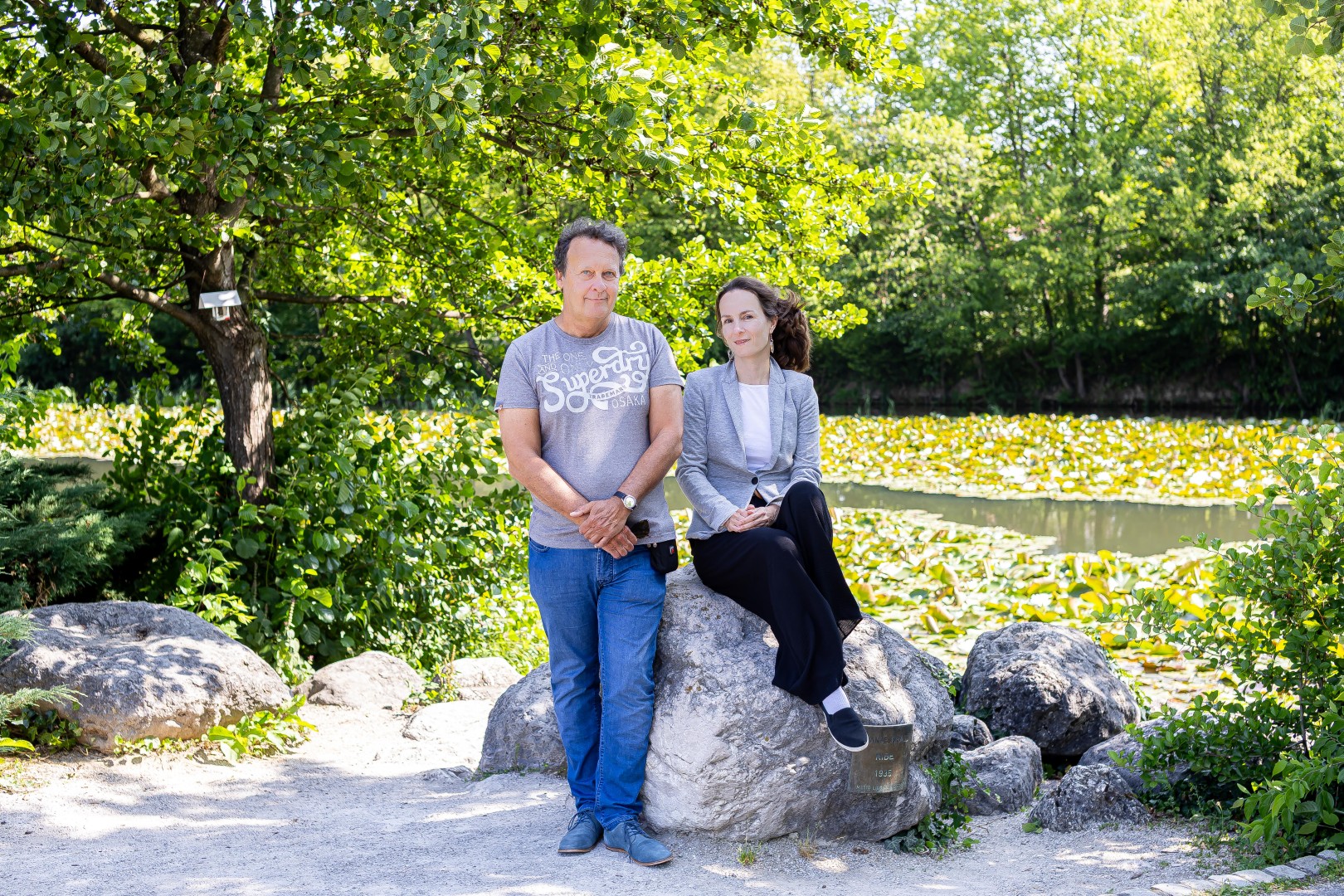
Photo Kristina Bursać

Founder and main co-funder of Cankarjev dom’s Arts and Culture programme

